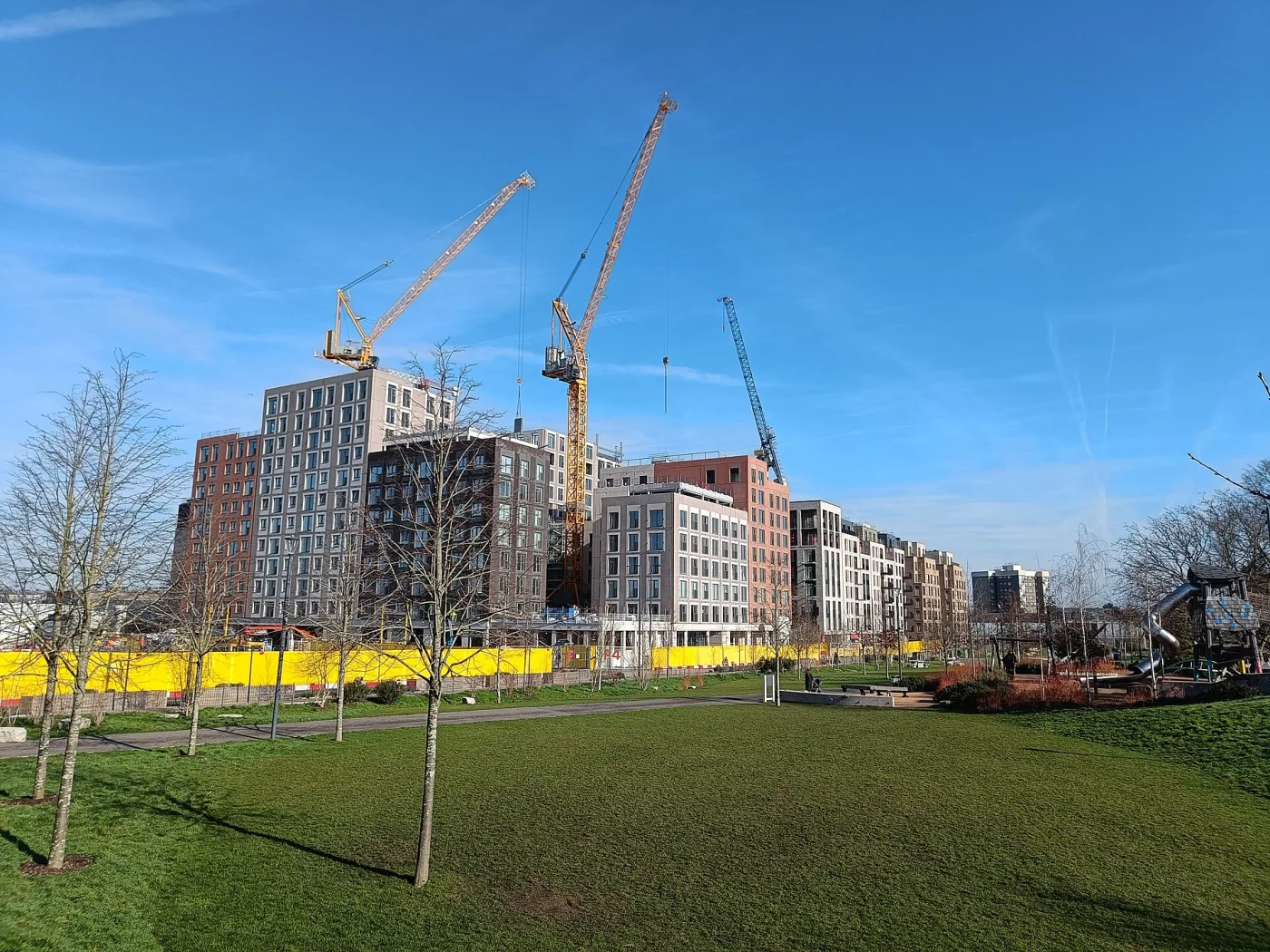

Barnet planning now: City Hall approved 1,768 homes the council refused, Edgware's 3,365-home Broadwalk scheme is cleared, and a new Local Plan is due in 2028.
Barnet is planning for more homes than almost any borough in London, and in 2026 the arguments about where they go stopped being local. Twice this year City Hall has stepped in over the council’s head, and the borough’s three big growth areas, Brent Cross, Colindale and Edgware, are all moving at once. This page is the running picture: what just happened, what the adopted Local Plan actually commits to, and the numbers underneath the fights.
What is happening: City Hall overrules Barnet, twice in one day
On 27 May 2026 the Deputy Mayor for Planning, Jules Pipe, approved both major schemes Barnet’s planning committee had refused in December 2025, a combined 1,768 homes:
- Great North Leisure Park, North Finchley: 1,485 homes in 20 buildings of up to 25 storeys, with a re-provided leisure centre and 25% affordable housing, against the Local Plan’s minimum of 35% (GLA hearing report). Barnet’s committee had refused it 8 votes to nil on density grounds before the Mayor called it in.
- High Barnet Place, on the High Barnet station car park: 283 homes in blocks of 5 to 11 storeys with 40% affordable housing, from a Barratt London and Places for London joint venture, taking the station’s 177-space car park with it (GLA hearing report).
Pipe told the hearing there was “a very clear and urgent need to deliver more homes, especially genuinely affordable homes”, while objectors argued Barnet already meets its targets; both Labour and Conservative councillors criticised the intervention (Barnet Post). Both permissions were conditional on legal agreements being signed by late July 2026.
Edgware: the 3,365-home Broadwalk scheme is through
The biggest scheme in the borough’s pipeline outside Brent Cross cleared its last political hurdle this spring. Ballymore and Places for London’s outline application for the Broadwalk Centre, the bus station and bus garage (ref 24/2686/OUT) proposes up to 3,365 homes plus 463 student or co-living units in buildings up to 29 storeys, with a rebuilt transport interchange and a basement bus depot (officer report). Barnet’s Strategic Planning Committee resolved to grant it 6 votes to 3 in July 2025 against strong local objection, and on 30 March 2026 the Deputy Mayor declined to intervene, clearing the council to issue the permission once the legal agreement completes.
The Local Plan behind it all
Every one of these decisions is judged against the Barnet Local Plan 2021 to 2036, adopted by Full Council on 4 March 2025 by 34 votes to 17, replacing a plan nearly twelve years out of date. The adopted plan commits the borough to a minimum of 35,460 new homes over 2021 to 2036, or 2,364 a year, concentrated in the growth areas: Brent Cross (7,420 homes), Colindale (5,190), Edgware (4,740), Mill Hill East, Staples Corner and Cricklewood, plus a new Metropolitan Town Centre at Brent Cross with up to 395,000 square metres of offices, 12,000 to 27,000 jobs, and a new regional park.
It will not last long. The Local Development Scheme adopted alongside it already schedules a completely new Local Plan, with preparation starting in 2026 and adoption targeted for November 2028, aligned to the next London Plan.
The numbers underneath the fights
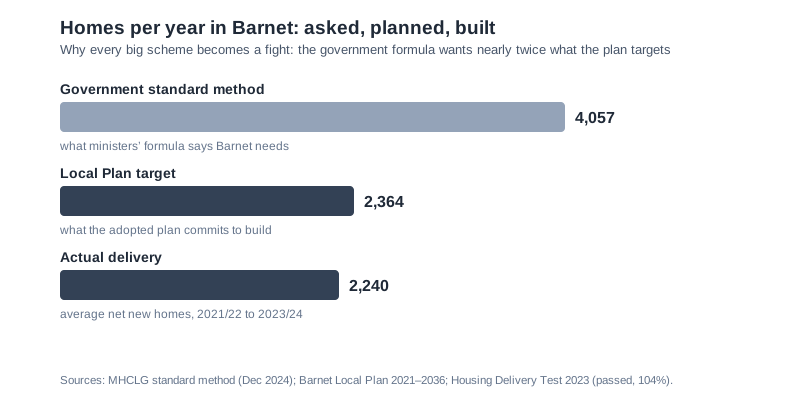
Three numbers explain why Barnet planning has become a tug of war. The government’s standard method, recalculated in December 2024, says Barnet needs 4,057 homes a year. The adopted Local Plan, in conformity with the London Plan target of 23,640 homes over ten years, plans for 2,364 a year. And actual delivery has averaged about 2,240 a year since 2021. On the measure that carries legal weight today, Barnet is passing: the latest Housing Delivery Test scored the borough at 104% with no penalty. But the gap between the government formula and the plan is the lever City Hall and developers now pull in every appeal and every hearing, and it is the central question the new Local Plan will have to answer.
Meanwhile at Brent Cross Town
The borough’s flagship is no longer a drawing. Barnet’s own Cabinet report of July 2025 records that by March 2026 932 homes and 600 student rooms would be complete at Brent Cross Town, with the first office building underway as a campus for Sheffield Hallam University’s London base (the council papers say it completes in summer 2026; the university itself says the campus opens in 2027). The approved third phase adds 666 student units and 352 co-living homes. Colindale, the second growth area, continues to fill in around the new stations, and its 5,190-home allocation makes it the visible proof of what the Local Plan numbers mean on the ground.
How to follow it, and have your say
Every application in these stories sits on the council’s public register, searchable by address or reference, and open for comment while consultation runs; our Barnet planning applications page walks through the portal, the weekly lists and what counts as a valid objection. Committee agendas, reports and recorded votes are all published on barnet.moderngov.co.uk, which is where most of the facts on this page come from. For what the building boom is doing to prices, see Barnet house prices.
Sources
- GLA Stage 3 hearing reports: Great North Leisure Park and High Barnet Place, 27 May 2026
- Barnet Post, 29 May 2026 and 2 June 2026 (Local Democracy Reporting)
- Barnet Full Council minutes, 4 March 2025 and the adopted Barnet Local Plan 2021-2036
- Edgware officer report, 24/2686/OUT, committee minutes and ianVisits on the Mayor’s decision
- London Plan 2021, Table 4.1; MHCLG standard method outcome; Housing Delivery Test 2023 measurement
- Brent Cross Town Third Phase Cabinet report, July 2025 and Sheffield Hallam University London
Checked against the council’s committee papers, the GLA’s hearing reports and government datasets on 7 August 2026. Scheme statuses change as legal agreements complete, so confirm the latest position on the planning register before relying on it. Related: Barnet planning applications, Barnet house prices and Barnet council tax bands.
Have your say